Gutters Overflowing in Heavy Rain
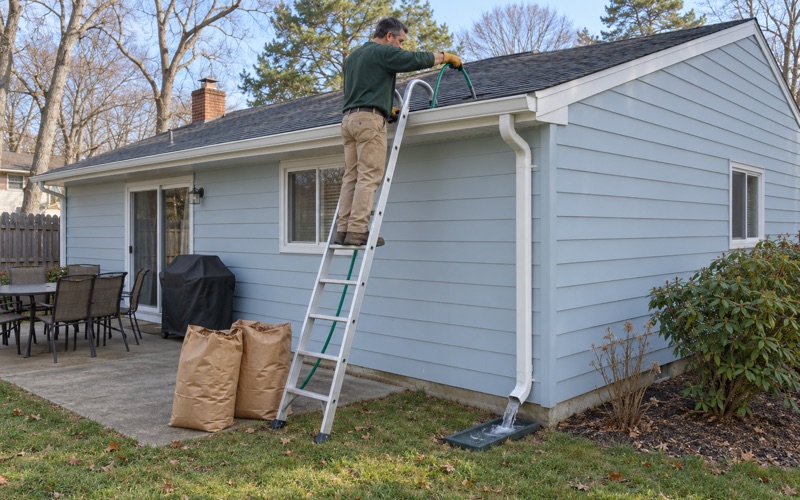
When gutters overflow only in heavy rain, the trough is usually too small, the downspouts too few, or the outlet undersized for the roof above. When they overflow in light rain too, there is almost always a clog. We find out which by running water through the system and watching where it backs up, then fix the cause rather than adding a guard and hoping.
Water Dripping Behind the Gutter
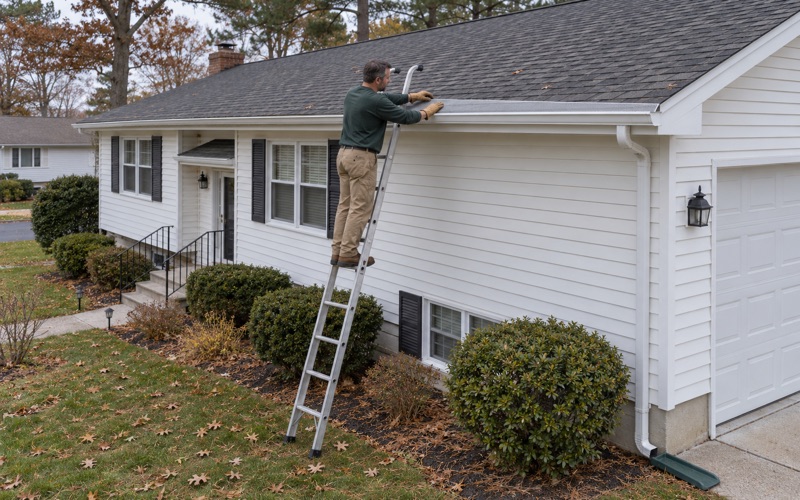
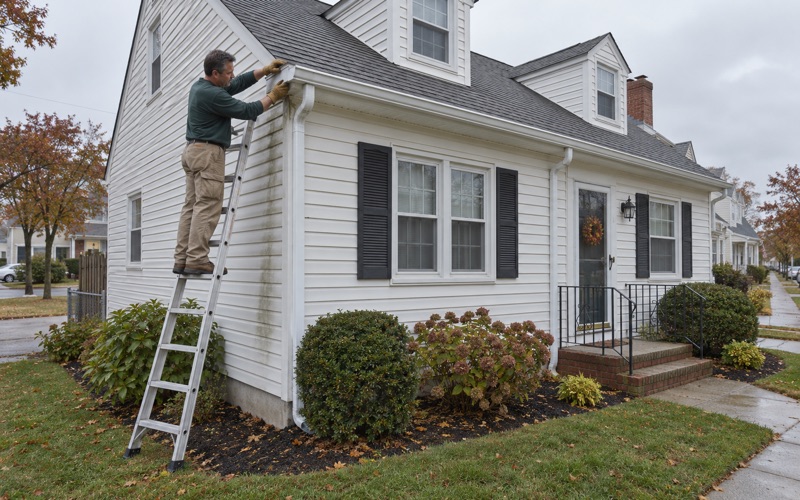
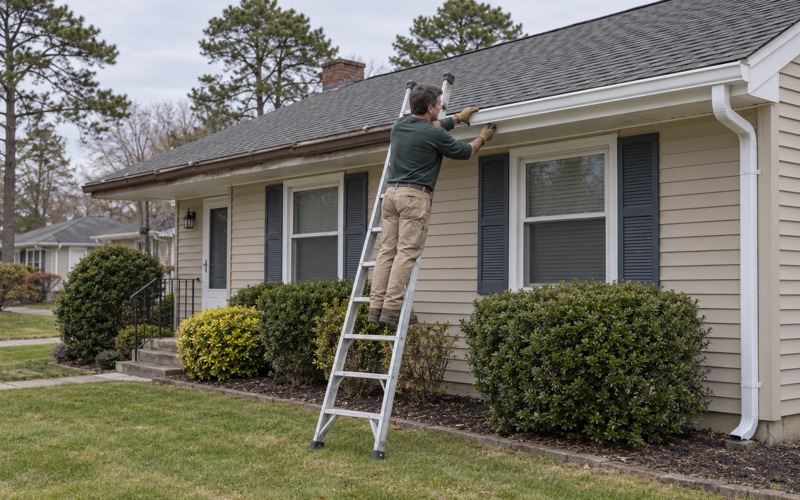
Water running behind the gutter instead of into it usually means the gutter apron or drip edge is missing, or the gutter was hung too low under the shingles. That water soaks the fascia and can streak the siding or reach the soffit. We add the missing flashing or rehang the gutter at the right height, so the roof edge sends water into the trough.
Leaking Seams, Corners and End Caps
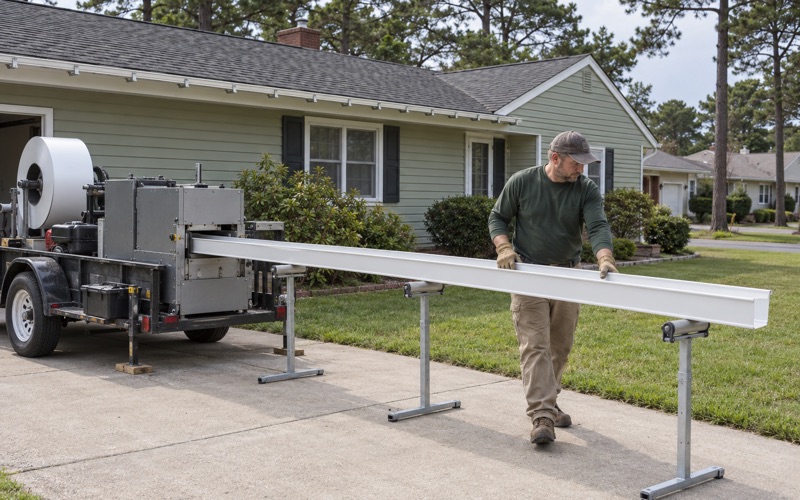
Even seamless gutters have joints at the corners, end caps and outlets, and those joints are sealed with caulk that eventually cracks. We clean the joint down to bare metal and reseal it with tripolymer gutter sealant, which stays flexible through hot summers and freezing nights. Box, strip and bay miters are inspected at the same time, since a loose corner is a common source of leaks.
Sagging Gutters Pulling Away From the House
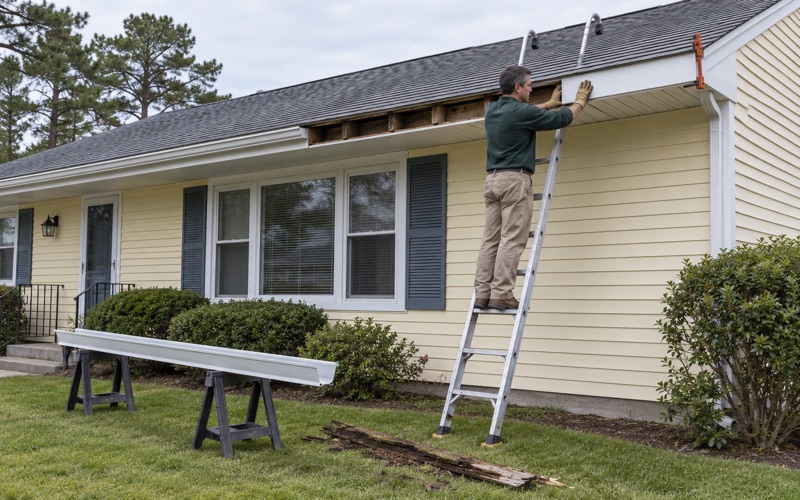
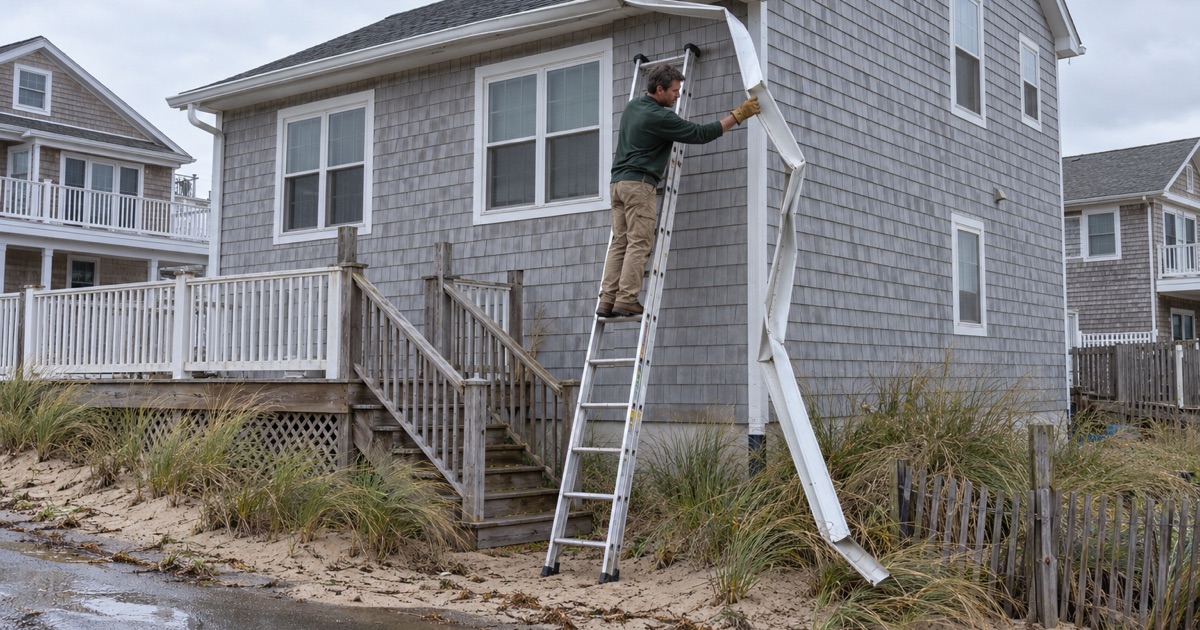
A gutter that sags or pulls away from the house has lost its grip on the fascia, often from loose spikes, rotted wood or the weight of standing water and debris. We reset the run on hidden hangers, replace soft fascia, and re-establish the pitch toward the downspouts. Left alone, a sagging run collects more water and pulls further away with each storm.
An Underground Downspout Line Backing Up
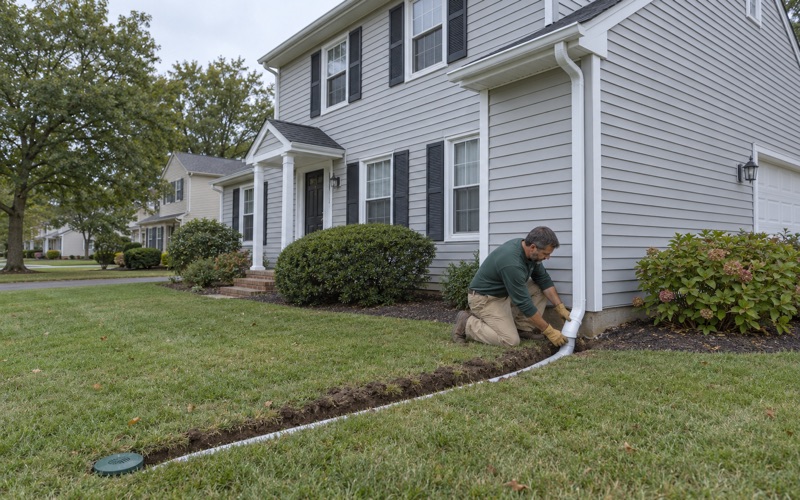
Many downspouts in the area drain into a buried pipe that carries water out to the yard, the curb or a pop-up drainage emitter. When roots, silt or crushed pipe block that line, water backs up and spills out at the downspout boot. We flush or snake the line, find the blockage, and replace damaged sections, so water travels away from the house rather than pooling at the corner.
Water in the Basement After Rain
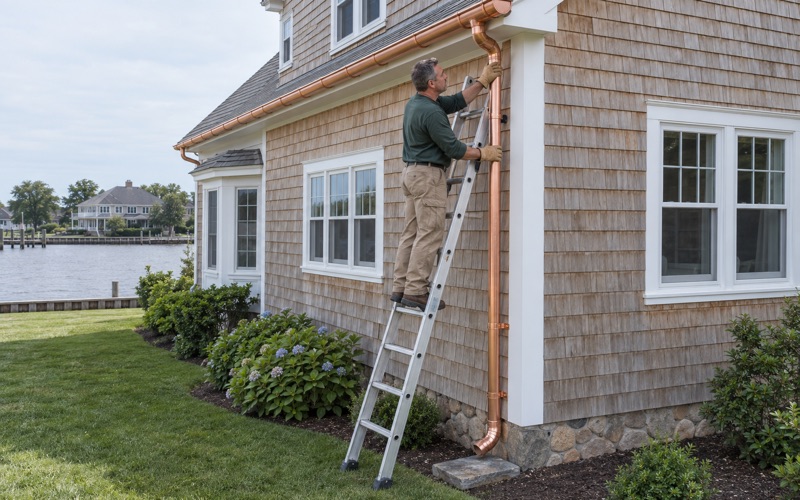
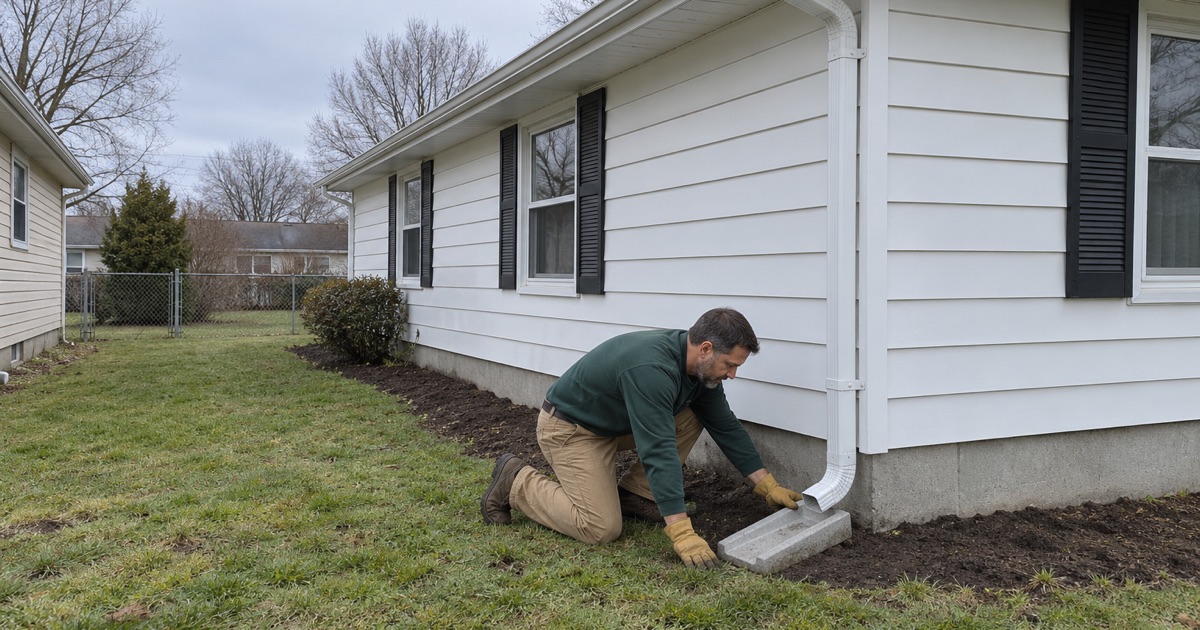
Water in a basement or crawl space after a storm often starts at the roof: a clogged gutter, a downspout that dumps beside the wall, or soil that slopes toward the house. We trace every downspout to where its water lands and check the ground around it. When a downspout empties against the foundation, we propose an extension or an underground downspout line before the owner spends money on interior waterproofing.
Downspout Extensions and Grading Away From the Foundation
New Jersey’s residential code edition, IRC 2021 R401.3, calls for the ground to fall 6 inches within the first 10 feet from the foundation. A downspout extension, splash block or buried line only helps if the soil beyond it slopes away. We show owners where the grade is flat or reversed, so the extension and the yard work together.
Ice in the Gutters and Heat Cable
Winter ice in gutters and downspouts can split seams, bend hangers and leave icicles hanging over walkways. Heat cable laid in the gutter and down the downspout keeps a channel open for melt, though it is a fix for the symptom while attic insulation and ventilation address the cause. Electricians also install heat cable, and we tell owners when an electrician’s outlet is the first step.