
Brick Quality Gutters handles soffit and fascia repair in Brick, NJ, serving surrounding cities including Point Pleasant, Leisure Village East, Brielle, Point Pleasant Beach and Leisure Village. After 20+ years of hanging gutters on shore houses and inland homes, we know the fascia behind a gutter is where water damage usually shows up first, and the soffit beneath it is where the damage tends to spread next.
Fascia is the vertical board along the roof edge that carries the gutter. Soffit is the panel underneath the overhang that closes it in and, on most houses, lets air into the attic. When a gutter overflows, leaks at a corner or runs water down behind itself, those boards stay wet, soften and rot, and the gutter loses the solid wood it needs to hang straight.
We repair soffit and fascia as part of the same job as the gutter that caused the damage, so the fix lasts. Soft wood is shown to the owner before it comes off, and the repair is priced on its own line of the estimate.
Fascia Board Rot and Replacement
Finding the Soft Spots
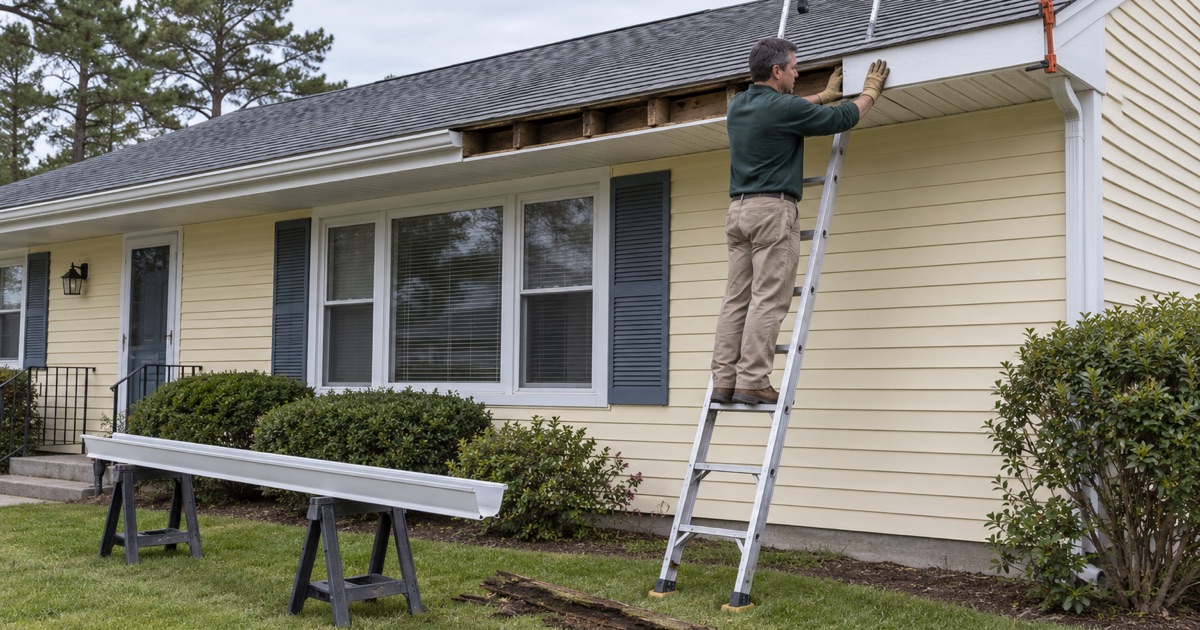
Rot in a fascia board rarely shows from the ground until it is advanced. We probe the boards along every gutter run, paying close attention to corners, the ends of runs and the spots under downspout outlets, since those are where water collects. Peeling paint, dark stains and hangers that will not tighten are all signs of soft wood behind the gutter.
When we find damage, we photograph it and show the owner before any board is removed. That way the owner sees exactly why the repair is needed and how far the rot reaches.
Replacing Boards and Rehanging the Gutter
Damaged sections are cut out back to sound wood and replaced with new lumber of matching size, fastened to the rafter tails. The gutter is then rehung on hidden hangers screwed into the new fascia, which grip far better than the spikes many older gutters relied on. Replacing the wood without fixing the leak above it only restarts the clock, so we correct the overflow, missing flashing or leaking joint at the same time.
Where the rot runs into the rafter tails or the roof sheathing, the repair goes beyond the fascia. We document what we find and explain the next step, whether that is a carpenter or a roofer.
Aluminum Fascia Wrap
After the wood is sound, many owners choose to cover the fascia with aluminum trim coil bent to fit the board. A wrap protects the wood from weather and removes the need to repaint the roof edge every few years. We bend the coil on site, match the color to the gutters or trim, and seal the laps so water cannot get behind the wrap.
A wrap must go over dry, solid wood. Covering a rotted board traps moisture against it and hides the problem until the gutter starts to pull loose again.
Soffit Repair and Attic Ventilation
Damaged and Sagging Soffit Panels
Soffit panels sag, crack and come loose when the wood behind them rots or when water soaks the overhang from a leaking gutter above. Older homes often have plywood soffit that delaminates when it stays wet, while newer homes typically have vinyl or aluminum panels set in channels. We replace damaged plywood, refit loose panels, and repair the framing that holds them up.
When only a few panels are damaged, we match the new soffit to the existing color and profile so the repair blends in. If the old panels are discontinued or badly faded, replacing a full side of the house usually gives a better result than a patchwork of mismatched pieces.
Vented Soffit and Airflow
On most houses, the soffit is part of the attic ventilation system, letting outside air in at the eaves so it can rise and exit near the ridge. Painting over vents, blocking them with insulation or replacing vented panels with solid ones cuts off that airflow. We install vented soffit where the house was designed for it, which helps keep the attic dry in summer and limits the conditions that lead to ice dams in winter.
Ventilation also matters for the roof itself. A hot, damp attic shortens the life of shingles and sheathing, so restoring soffit airflow is a small repair that protects a much larger investment.
Birds, Squirrels and Insects in the Soffit
A gap in the soffit or a rotted corner is an easy way into the attic for birds, squirrels, bats and insects. Once inside, animals tear insulation and can chew wiring. We close the openings with new panels or metal, and we leave the final sealing until any animals are out, often working alongside a wildlife removal service when one is needed.
Insects follow the same route. Carpenter bees bore into exposed wood at the roof edge, and wasps build nests in sheltered corners of the overhang. Covering bare wood with a wrap and closing the gaps in the soffit leaves them far fewer places to settle.
Shore Homes, Older Houses and Associations
Salt Air on Trim Near the Ocean and Bay
Prepainted aluminum fascia and soffit near the ocean, Barnegat Bay and the brackish rivers face harder conditions than trim inland. Coil manufacturers recognize this: one leading maker shortens its finish warranty for prepainted aluminum installed within a half mile of salt or brackish water and asks for an annual rinse to keep that coverage. We tell owners near the water what their trim needs to keep looking right, and we choose fasteners suited to salt air.
Lead Paint on Pre-1978 Trim
Many homes in the area were built before 1978, and their painted fascia, soffit and trim may contain lead. Removing or cutting that wood creates lead dust, so the work follows the EPA Renovation, Repair and Painting rule, with containment, careful cleanup and disposal. We plan for those steps from the start rather than discovering them halfway through the job.
Adult Communities and Condo Associations
In some 55+ communities and condo associations, fascia and soffit are maintained by the association as part of the building exterior. In others, they belong to the owner. We check the master deed or the management office before quoting, and any color or material changes are cleared with the board first.
For boards and property managers, we document each building’s fascia and soffit condition with photos and notes. That record makes it easier to plan repairs over several seasons rather than reacting to the worst building each year.
- 20+ Years Experience
- Free Written Estimates
- Before-and-After Photos