
Brick Quality Gutters installs gutter guards in Brick, NJ, serving surrounding cities including Point Pleasant, Leisure Village East, Brielle, Point Pleasant Beach and Leisure Village. We have spent 20+ years cleaning gutters under the pines and oaks of Ocean and Monmouth counties, and that work is how we learned which guards keep a gutter flowing and which only hide the clog from view.
The right guard depends on what falls on the roof. Pitch pine and white pine drop short, stiff needles that slip through coarse openings, while oaks and maples drop broad leaves that pile on top of a cover and stems that wedge into downspouts. Before we recommend anything, we stand in the yard, look at the trees over each run, and check the gutters underneath for pitch, hanger strength and leaks.
Guards reduce how often a gutter needs attention; they do not make it maintenance-free. We say that plainly on every estimate, along with the guard we suggest, the reason it fits that lot, and how often it should be rinsed or checked.
Gutter Guard Types We Install
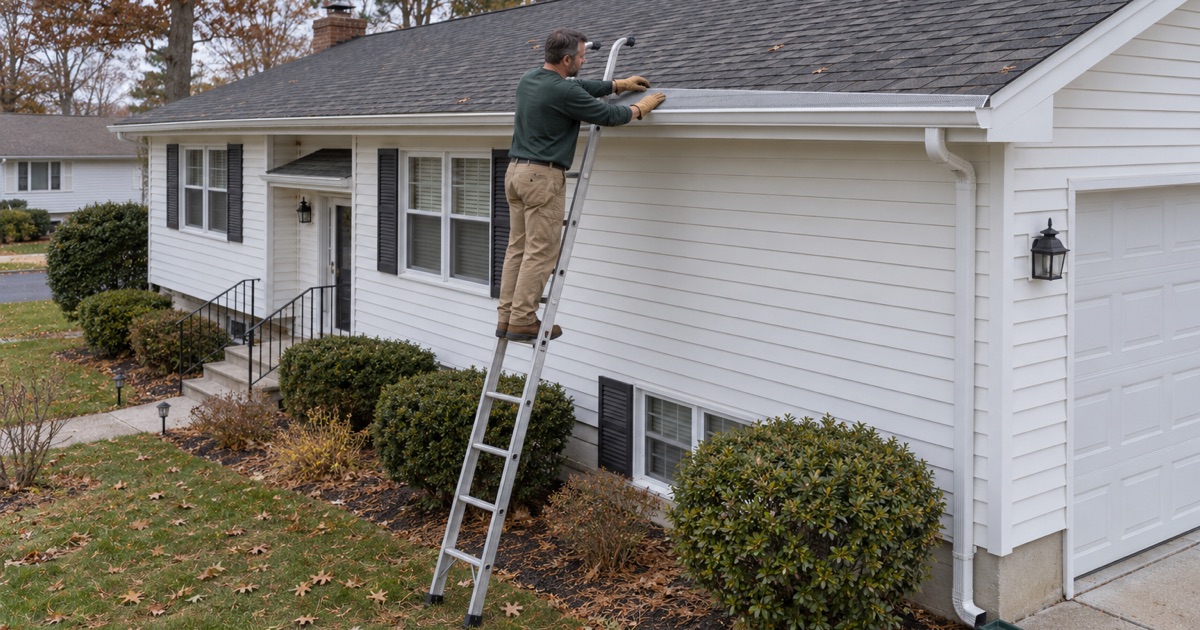
Stainless Steel Micro-Mesh Gutter Guards
Stainless steel micro-mesh gutter guards stretch a fine woven screen over a rigid aluminum frame, fastened to the front lip of the gutter and slid under the first row of shingles or set on the drip edge. Fine mesh such as a 275-micron screen stops pine needles, shingle grit and seed pods while water passes straight through. For most of the pine-shaded lots around Brick, Toms River and Lakewood, this is the design we recommend first.
Mesh does need an occasional rinse, because pollen and fine dust can film over the surface and make water skip past it in a hard rain. A soft brush or a garden hose from a ladder clears it, and we show owners where to look so they can tell when it is time.
Perforated Screens and Snap-In Guards
Perforated aluminum screens, sometimes called drop-in or lock-on screens, cover the gutter with rows of small holes. They are less expensive than micro-mesh and handle broad oak and maple leaves well, since those leaves sit on top and blow off once they dry. Needles, however, can slip through the openings and collect inside the gutter.
We suggest screens on lots with mostly hardwood trees, on detached garages and sheds, and for owners who want a lower price and are comfortable with an annual check. Choosing a screen with a stiff frame matters, since flimsy screens bend under a ladder or a heavy wet snow.
Reverse-Curve Hoods and One-Piece Hooded Systems
Reverse-curve guards cover the gutter with a solid hood that curls water around its rounded nose and into a slot below, while leaves slide off the edge. Some are installed over existing gutters, and others are one-piece hooded systems in which the seamless gutter and hood are formed together. The one-piece type replaces the gutter entirely, so it works best when the existing gutters are already due for replacement.
Hoods handle large leaves well but can let a curtain of water overshoot the nose in a very heavy downpour, and pine needles can collect in the slot. We explain those tradeoffs side by side with mesh before an owner commits to either.
Brush and Foam Gutter Inserts
Brush guards are long cylinders of bristles that sit inside the gutter, and foam inserts are triangular blocks that fill the trough. Both are easy to install and inexpensive, but they trap needles and seeds in their surface, and foam can stay damp and grow moss. We rarely recommend either for houses under trees, and we tell owners why when they ask about them.
Matching the Guard to the Debris on Your Lot
Pine Needles From the Pinelands Edge
Brick, Toms River, Lakewood and the towns to the south sit near the edge of the Pinelands, and many lots still carry tall pines over the roof. Their needles fall in every season, not only in autumn, and they bridge across coarse openings until a mat forms that holds water. Fine micro-mesh is the most reliable answer, and we make sure the mesh sits flat so needles slide off rather than catching on a ridge.
Needle-heavy lots also fill the valleys of the roof, where two slopes meet and funnel debris into one corner of the gutter. We look closely at those corners, since they are where a guard is most likely to be overwhelmed, and we sometimes add a larger outlet or a second downspout there so the water has somewhere to go.
Oak Leaves, Acorns and Seed Pods Inland
Lots in Ramtown, Howell, Wall and the farther inland towns tend to have more oaks, maples and sweetgums, which drop leaves, acorns and spiky seed balls in the fall. Broad leaves sit on top of a guard and need a surface that sheds them as they dry. We choose a guard with a slight pitch toward the front edge, and we fit downspout outlets with strainers where acorns and stems tend to collect.
Fall is when these lots need the most attention, and leaf season in many inland towns runs into early December. A guard that sheds dry leaves well still benefits from a quick check after the last trees drop, so we tell owners which corners to glance at once the yard is raked.
Shingle Grit, Roof Moss and Mixed Debris
Older asphalt roofs shed granules that wash into the gutter as a fine gray sand. Many lots also have a mix of pine and hardwood trees, so a single roof can collect both needles and leaves. In those cases we lean toward micro-mesh with a solid frame, because it stops the finest material while still shedding the larger leaves.
What to Check Before Adding Guards
Gutter Condition, Pitch and Hangers
A guard bolted onto a sagging, leaking or flat gutter will hold standing water and debris instead of fixing anything. Before we install guards, we check every run for low spots, loose hangers, leaking seams and rotted fascia. Small repairs are made first and listed on their own line of the estimate, and gutters that are failing are priced for replacement before a guard is put on top.
Downspouts get the same attention. A guard keeps leaves out of the trough, but if the downspout below it empties against the foundation, the house still takes on water. We follow every downspout to where it discharges and suggest an extension or an underground line when the water lands too close to the wall.
Roof Edge, Shingles and Warranties
Some guards slide under the first course of shingles, while others clip to the drip edge or the gutter lip only. Lifting shingles on an older roof can crack them, and some roofing manufacturers limit their warranties when shingles are disturbed. We look at the roof’s age and type and choose a mounting method that does not put the roof at risk.
Associations, Rentals and Second Homes
In many adult communities and condo associations, exterior changes such as guards need board or committee approval before they go up. We check the master deed or contact the management office before scheduling. For rental houses and second homes, we send before-and-after photos when the work is complete, so an owner who lives elsewhere can see the result without driving down.
Our Step-by-Step Gutter Guard Process
Step 1: Look at the Trees and the Gutters
We walk the property, note the species over each run, and inspect the gutters, downspouts and fascia. The estimate names the guard we recommend, the reason it fits, and any repairs needed first.
Step 2: Clean, Flush and Repair
Every gutter is cleaned and every downspout flushed before guards go on, so nothing is sealed in underneath. Debris is bagged and hauled away rather than left on the lawn or blown into the street. Leaking joints are resealed and loose hangers are tightened or replaced.
Step 3: Install and Water Test
Guards are fitted run by run, cut neatly at the miters and fastened according to the manufacturer’s method. We run water across the finished guards to confirm it reaches the gutter and leaves through every downspout.
- 20+ Years Experience
- Free Written Estimates
- Before-and-After Photos